
(since 2025)
Consuming explores consumption not as an economic activity but as a cultural and social condition. The series begins with shop windows—those thresholds between public space and carefully staged worlds of merchandise, where desire is created, projected, and continually renewed.
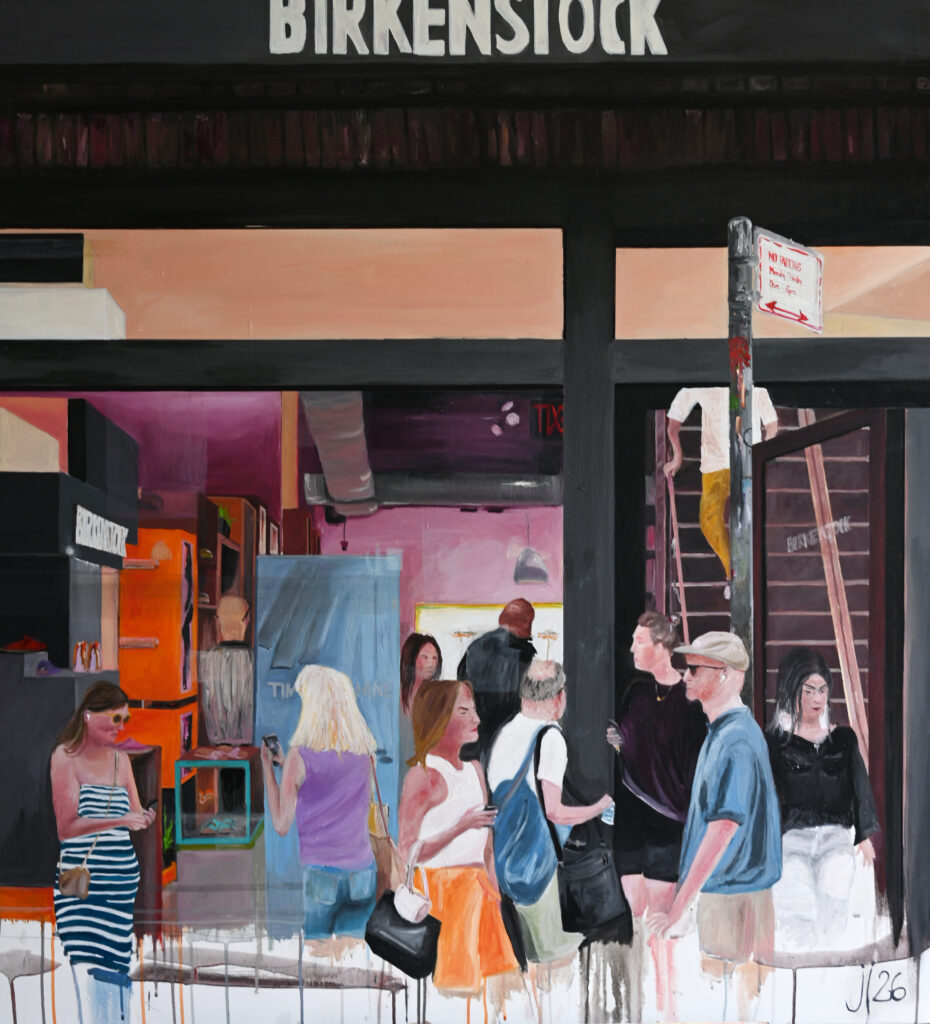
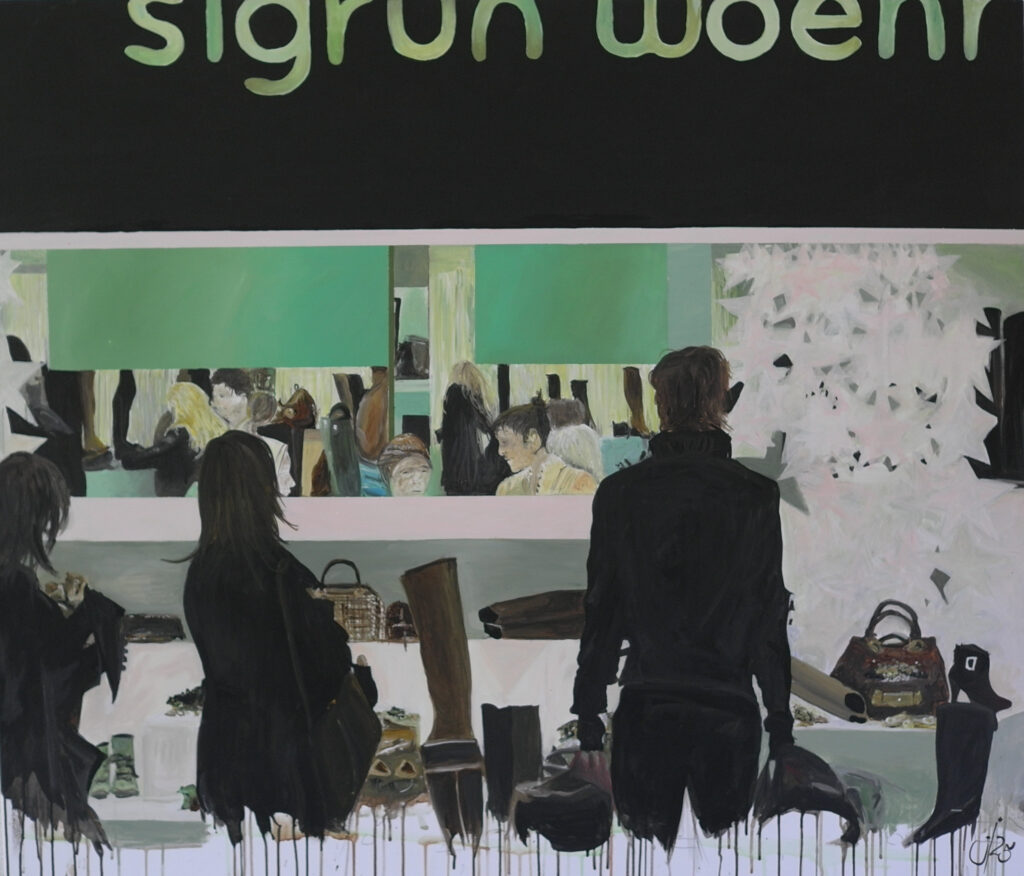
The large-scale acrylic paintings depict real shoe stores in Pforzheim and New York City. At first glance, they appear to document ordinary scenes: people studying window displays, entering and leaving shops, or carrying shopping bags through the streets. Yet the paintings are less concerned with the act of purchasing than with the mechanisms of attraction, the aesthetics of retail, and the promises embedded in brands and consumer culture.
This becomes particularly evident in the Birkenstock store in SoHo. Once associated with practicality, simplicity, and everyday comfort, the sandal has evolved into an internationally desired lifestyle product. Between the shoe shop in Pforzheim and the boutique in New York, the same dynamic unfolds: consumer culture transcends geographical and cultural boundaries, connecting people through shared images, aspirations, and desires.
Rather than offering a moral judgment, Consuming observes the rituals of contemporary consumer culture. The series reflects on how products become markers of identity, how commercial spaces are transformed into stages of desire, and how the simple act of looking through a shop window reveals far more than an intention to buy. It speaks of aspiration, belonging, and the subtle ways in which consumption shapes our perception of ourselves and the world around us.
Consuming untersucht den Konsum nicht als wirtschaftlichen Vorgang, sondern als kulturelles und gesellschaftliches Phänomen. Ausgangspunkt der Serie sind Schaufenster – jene Schwellen zwischen öffentlichem Raum und inszenierter Warenwelt, an denen Begehren entsteht und immer wieder neu entfacht wird.
Die großformatigen Acryl- bzw. Ölgemälde zeigen reale Schuhgeschäfte in Pforzheim und New York. Auf den ersten Blick dokumentieren sie alltägliche Szenen: Menschen betrachten Auslagen, betreten Geschäfte oder verlassen sie mit Einkaufstaschen. Doch die Bilder erzählen von mehr als dem Erwerb eines Produkts. Sie richten den Blick auf die Mechanismen der Verführung, auf die Ästhetik des Konsums und auf die Versprechen, die Marken und Waren mit sich tragen.
Besonders deutlich wird dies am Beispiel eines Birkenstock-Geschäfts in New York. Ein Schuh, der lange Zeit als funktional, schlicht und nahezu unscheinbar galt, wird zum internationalen Lifestyle-Produkt und zum Objekt globalen Begehrens. Zwischen dem Schaufenster eines Schuhgeschäfts in Pforzheim und einer Boutique in SoHo zeigt sich dieselbe Dynamik: Konsum überschreitet geografische und kulturelle Grenzen und verbindet Menschen durch gemeinsame Bilder, Wünsche und Sehnsüchte.
Die Serie versteht Konsum nicht als moralisches Urteil, sondern als Spiegel unserer Gegenwart. Sie fragt danach, wie Waren zu Trägern von Identität werden, wie öffentliche Räume zu Bühnen des Begehrens werden und welche Geschichten wir uns selbst erzählen, wenn wir kaufen – oder einfach nur stehen bleiben und durch ein Schaufenster blicken.